
What Crowther Roofing’s RoofCheck™ Includes—and Why It Matters
Understand the observations, documentation, and priorities behind a useful roof evaluation.
Request a roof inspection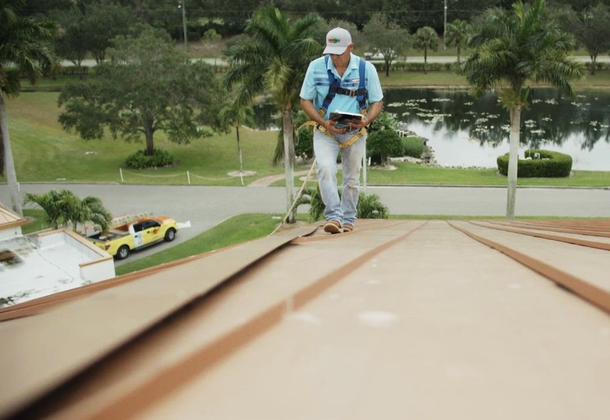
A useful roof inspection should tell the property owner what is performing, what needs attention, what can be monitored, and what requires immediate action. Crowther Roofing’s RoofCheck™ is designed to evaluate the roof as a complete system rather than glancing at the visible surface and producing a prewritten sales conclusion.
In this guide
A Roof Is More Than the Material You See
Shingles, tile, metal panels, membranes, and coatings receive most of the attention because they are visible. The roof also depends on:
- Underlayment
- Flashing
- Fasteners and attachments
- Valleys
- Ridge and hip details
- Roof edges
- Penetrations
- Drainage
- Ventilation conditions
- Sealants
- Previous repairs
- Roof deck and structural support
A roof covering may look acceptable while a transition, flashing detail, drain, or penetration creates a hidden water-entry risk.
The RoofCheck™ Begins With Property Context
The inspection becomes more useful when the technician understands why it was requested.
Relevant information includes:
- Recent storms or wind events
- Known leaks or ceiling stains
- Roof age and material
- Previous repairs
- Solar, HVAC, antenna, or remodeling work
- Property-sale or purchase plans
- Insurance or maintenance documentation needs
- Areas of recurring concern
The homeowner or facility manager should point out interior symptoms and provide previous reports or invoices when available.
Exterior Roof Condition
The technician evaluates the visible roof surface for conditions such as:
- Missing, lifted, cracked, or deteriorated materials
- Shingle granule loss and exposed asphalt
- Broken, slipped, or uneven tile
- Metal corrosion, open seams, or damaged coatings
- Membrane punctures, blisters, cracks, and open laps
- Coating wear or poor adhesion
- Debris and biological growth
- Signs of improper foot traffic or mechanical damage
The goal is to identify patterns. One cracked tile may be isolated. Similar damage across several slopes may indicate a broader issue.
Flashing, Transitions, and Penetrations
Many leaks begin where different materials and surfaces meet. RoofCheck™ pays attention to:
- Wall and step flashing
- Chimneys and skylights
- Pipe boots and vents
- Equipment curbs
- Roof-to-wall transitions
- Valleys
- Parapets
- Expansion joints
- Conduits and rooftop attachments
- Solar and satellite penetrations
Sealant is evaluated as one component, not as the universal answer to every opening. Applying more sealant over movement, corrosion, trapped moisture, or failed flashing may hide the problem without correcting it.
Drainage and Roof Edges
Water must leave the roof efficiently. The inspection reviews:
- Gutters and downspouts
- Drains and strainers
- Scuppers and overflow paths
- Valleys
- Ponding areas
- Debris buildup
- Drip edge, fascia, soffits, and perimeter metal
Edges and corners also receive high wind pressure during storms. Loose edge materials can allow wind to reach beneath the roof covering and increase uplift.
Interior and Attic Observations
When accessible and appropriate, interior observations may help identify:
- Ceiling stains
- Damp insulation
- Discolored decking
- Musty odors
- Daylight through openings
- Moisture near penetrations
- Ventilation concerns
- Signs that water traveled away from the exterior entry point
A stain rarely identifies the exact leak location by itself. Water may move along rafters, decking, insulation, or ductwork.
Documentation and Priority Levels
A useful inspection should produce understandable findings. RoofCheck™ documentation may include photos, condition descriptions, repair recommendations, maintenance priorities, and areas to monitor.
The property owner should be able to distinguish:
- Active or urgent problems
- Recommended repairs
- Routine maintenance
- Conditions to monitor
- Replacement considerations
The report should also explain uncertainty. Some hidden conditions cannot be confirmed until materials are removed.
What RoofCheck™ Is Not
A professional inspection is not:
- A guarantee that no hidden defect exists
- A substitute for destructive testing when required
- A promise that severe future weather will not cause damage
- A reason to recommend replacement without evidence
- A five-minute driveway estimate
The value comes from documented observations, technical judgment, and a recommendation connected to the roof’s actual condition.
Crowther Roofing’s Florida Experience
Crowther Roofing is part of a five-generation company with roots reaching back to 1955 and decades of Florida experience. The roofing division operates under Florida license CCC039822 and supports residential and commercial properties across Fort Myers, Sarasota, Jupiter, and additional Florida markets.
Know Where the Roof Stands
A RoofCheck™ gives property owners a practical condition baseline. Whether the roof experienced a storm, developed a leak, is approaching a real-estate transaction, or simply has not been evaluated recently, documented information is more useful than guessing from the driveway.
Frequently Asked Questions
How long does a RoofCheck™ take?
Timing depends on roof size, type, access, complexity, and the reason for inspection. A simple residential roof may require less time than a large commercial facility with multiple systems and penetrations.
Does a roof inspection include the attic?
Attic or interior observations may be included when access is available, safe, and relevant. The exterior roof and interior symptoms should be considered together.
Will an inspection tell me the exact repair price?
The inspection identifies conditions and recommended work. Pricing may require measurements, material availability, access planning, or additional investigation.
Does every RoofCheck™ lead to a replacement recommendation?
No. The purpose is to determine actual condition. Findings may support maintenance, localized repair, monitoring, or replacement depending on the evidence.
Can a roof pass inspection and later leak?
An inspection reflects visible and accessible conditions at that time. Future storms, movement, damage, or hidden defects can still affect performance.
Should I schedule a RoofCheck™ before buying a home?
Yes. A dedicated roof evaluation can provide more specific information about materials, repairs, flashing, drainage, and expected maintenance than a general visual review alone.
Get a clearer picture of your roof.
Tell Crowther Roofing what you are seeing. Request an inspection and ask about RoofCheck™ maintenance for your property.
Request a roof inspection